



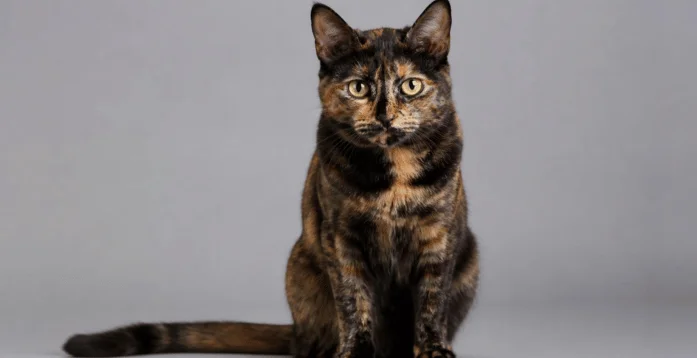
A tortie cat stands out because its coat blends dark and orange tones into a mottled pattern. That coloring comes from genetics, not from a separate breed. Most torties are female, and their famous “tortitude” is more folklore than a reliable personality test.
A tortie cat is a cat with a mottled tortoiseshell coat, usually mixing black or brown with orange or cream. The pattern is not a breed, and it can appear in many breeds. Most are female because the orange-color gene is linked to the X chromosome.
| Key fact | What to know |
|---|---|
| Proper term | Tortoiseshell |
| Breed or pattern? | A coat pattern, not a breed |
| Common colors | Black or brown mixed with orange, red, or cream |
| Sex | Almost always female because the orange trait is X-linked. |
| Variations | Dilute tortie, torbie, longhair, and shorthair |
| Personality | Individual temperament matters more than coat color. |
| Typical lifespan | No special tortoiseshell lifespan; cats commonly live about 13–17 years. |
| Special care | Standard feline care, adjusted for breed, age, coat, and health |
Key takeaway: Tortoiseshell describes appearance rather than ancestry. Genetics explain the striking coat and why females greatly outnumber males. Good care should focus on the individual cat instead of assumptions about color or personality.
What Is a Tortie Cat?
Tortoiseshell cats usually have intermingled patches of dark and orange-based fur. Their markings can look finely speckled, marbled, or divided into larger areas. White is usually limited compared with the large white areas commonly seen on calicos.
The pattern can occur in mixed-breed cats and recognized pedigreed breeds. Maine Coons, Persians, American Shorthairs, and other breeds can display tortoiseshell coloring. Milsblog’s feature on the Maine Coon breed and record-size cats provides more background on one breed that may carry varied coat colors.
That distinction matters when estimating size, grooming needs, and possible health risks. A tortoiseshell Persian and a domestic shorthair can need different care. Their shared coloring does not make them members of one breed.
The Genetics Behind a Tortie Cat Coat
Scientists have long known that orange coloring in domestic cats is linked to the X chromosome. A major part of the molecular explanation became clearer in 2025. Two Current Biology research teams connected orange coloring with a small deletion affecting ARHGAP36 regulation.
Female cats normally carry two X chromosomes. Early in development, cells randomly silence one X chromosome through X-inactivation. Different groups of skin cells can therefore express different color instructions.
That cellular mosaic creates neighboring areas producing dark or orange-based hair. Each animal receives its own distribution of those cell groups. The result is the irregular patchwork associated with tortoiseshell coloring.
This recent genetic discovery adds useful detail to older explanations of feline coat inheritance. Researchers found the implicated deletion strongly associated with orange-colored cats in their samples. The work also helps explain both tortoiseshell and calico patterns.
Why Are Most Tortoiseshell Cats Female?
The orange-color trait sits on the X chromosome. Typical females have two X chromosomes, while typical males have one X and one Y. Having two X chromosomes allows different orange and non-orange instructions to appear together.
A typical XY male usually expresses one version of that X-linked color instruction. That makes ordinary male tortoiseshell coloring biologically uncommon. Rare exceptions can have unusual chromosome combinations or other genetic circumstances.
Male tortoiseshells can occur when a cat has an extra X chromosome, such as an XXY arrangement. Other uncommon mechanisms can also produce mixed coloring. A veterinarian can confirm a rare male’s sex and discuss any individual health considerations.
Is “Tortitude” a Real Personality Trait?

Owners often use “tortitude” for cats described as vocal, confident, independent, or quick to express displeasure. The nickname is popular, but it should not determine expectations about a particular animal. Socialization, genetics, health, environment, and past experiences can all shape behavior.
A UC Davis-led study analyzed 1,274 completed guardian surveys. Owners reported more human-directed aggression among several color groups, including sex-linked orange females. Differences involving handling and veterinary visits were small in parts of the analysis.
The study relied on owner-reported behavior rather than controlled personality testing. That makes broad claims about every tortoiseshell inappropriate. A calm lap cat and an energetic independent cat can wear essentially the same colors.
Behavior changes also deserve attention regardless of coat pattern. Pain, fear, stress, or illness can alter how a cat responds to people. Sudden aggression or sensitivity should prompt a veterinary conversation.
Tortie vs. Calico: How Can You Tell the Difference?
Tortoiseshell and calico coloring share related X-linked genetics. The easiest visual difference involves how much white appears in the coat. U.S. cat terminology usually reserves “calico” for cats showing prominent white alongside orange and dark patches.
| Feature | Tortoiseshell | Calico |
|---|---|---|
| Main colors | Dark and orange-based colors | Dark, orange-based, and white |
| White fur | Usually little or none | Usually prominent |
| Pattern | Often mottled or blended | Often larger, distinct patches |
| Sex distribution | Overwhelmingly female | Overwhelmingly female |
| Breed status | Coat pattern | Coat pattern |
A torbie adds another variation because tabby markings appear within tortoiseshell coloring. Dilute versions replace stronger black and orange shades with softer blue-gray and cream tones. These terms describe appearance rather than separate breeds.
Health and Lifespan
Tortoiseshell coloring does not create one universal health profile. Health risks depend more on breed, ancestry, age, lifestyle, and individual genetics. Owners should therefore base preventive care on the whole animal rather than coat color alone. You might also like Teacup Maltipoo.
PetMD places the general feline lifespan around 13 to 17 years. Many cats can reach their late teens or twenties with suitable care. Nutrition, preventive medicine, environment, and lifestyle can influence longevity.
Indoor living also reduces exposure to traffic, predators, infectious disease, and several environmental hazards. Supervised outdoor time or a secure patio can provide enrichment with less roaming risk. Regular veterinary examinations remain useful throughout every life stage.
How to Care for a Tortoiseshell Cat
A tortie cat generally needs the same foundations of care as any other domestic feline. Coat length, age, medical history, and breed background should guide specific routines. You can also browse Milsblog’s pet guides for related household pet topics.
- Feed a complete and balanced diet suited to the cat’s age and veterinary needs.
- Provide fresh water, clean litter boxes, scratching areas, hiding places, and daily play.
- Brush according to coat length, with more frequent grooming for longer coats.
- Keep vaccinations, parasite prevention, dental care, and wellness visits current.
- Make indoor spaces enriching with climbing areas, window views, toys, and resting locations.
Household safety matters because curious cats often investigate plants, food, and decorations. Milsblog’s guide to carnation toxicity in cats explains one common flower concern. Always identify plants before placing them where a cat can reach them.
Watch the individual instead of trying to manage a stereotype. A shy animal may need quiet hiding spaces and slower introductions. A highly active cat may benefit from more structured play and climbing opportunities.
Choosing or Adopting a Tortie
Coat pattern can attract your attention, but behavior and health should drive an adoption decision. Spend time observing how the cat reacts to touch, play, strangers, and normal household activity. Ask the rescue or shelter about medical history and established habits.
Consider your household before focusing on color. Children, other pets, available space, and daily schedules can affect compatibility. Matching temperament to your home is more useful than looking for a supposed “tortitude” personality.
A longhaired animal may also require a greater grooming commitment. Certain pedigreed cats can have breed-specific health concerns that deserve discussion. The coat pattern alone cannot tell you what those needs will be.
Frequently Asked Questions
Is a tortie cat a breed?
No, tortoiseshell is a coat pattern rather than a breed. It can appear in mixed-breed cats and numerous established breeds. Breed traits should therefore be evaluated separately from coat coloring.
Are tortoiseshell cats always female?
No, but the overwhelming majority are female because their coloring depends on X-linked genetics. Rare males can have unusual chromosome arrangements, including an extra X chromosome. These exceptions are uncommon but biologically possible.
Are torties aggressive?
Coat color cannot reliably tell you whether one individual will be aggressive. One owner survey found associations between certain colors and reported aggression, but its findings do not predict every cat. Temperament, socialization, stress, health, and environment all matter.
How long do tortoiseshell cats live?
Their coloring does not give them a separate lifespan from other cats. PetMD reports a general feline average of roughly 13 to 17 years. Preventive care, genetics, nutrition, safety, and lifestyle can move an individual above or below that range.
What Makes Torties So Interesting?
A tortoiseshell coat is a visible result of some remarkable feline genetics. Modern research has now identified molecular details behind orange coloring that remained unresolved for decades. Yet appearance still tells you surprisingly little about the personality underneath.
If you share your home with a tortie, learn that individual cat’s preferences and routines. Give her appropriate veterinary care, enrichment, good nutrition, and a safe environment. Those choices matter far more than any personality stereotype attached to her colors.
