



Cat attract litter can help some cats return to a litter box. It works best when texture, scent, or habit contributes to avoidance. In U.S. searches, the term usually refers to Dr. Elsey’s Cat Attract. Sudden house soiling still needs medical causes ruled out first.
| Key point | What to know |
|---|---|
| What it is | Clumping natural clay litter with a proprietary blend of natural grasses |
| Main purpose | Encourage cats to investigate and use the litter box |
| Best fit | Retraining, new-cat transitions, or litter-box avoidance after medical causes are considered |
| Not a substitute for | Veterinary evaluation when elimination changes suddenly, or a cat seems painful |
| Manufacturer directions | Use a clean, dry box, fill 3–4 inches, and scoop twice daily |
| Related options | Ultra Litter Attractant, Kitten Attract, and Crystal Attract |
Direct answer: Cat Attract litter makes the litter box more appealing through natural herbs, texture, and clumping clay. It may help cats with surface or box preferences. It cannot diagnose pain, urinary disease, constipation, stress, or box-location problems, so persistent or sudden accidents need broader troubleshooting.
Key Takeaways
| Takeaway | Why it matters |
|---|---|
| Treat it as behavior support | Attractant litter does not treat medical causes of house soiling |
| Keep the box appealing | Cleanliness, access, location, and box size can affect acceptance |
| Expect individual results | Cats avoid boxes for many different reasons |
| Test litter depth | Product directions and individual feline preferences may differ |
| Watch for warning signs | Sudden or painful elimination changes warrant veterinary advice |
What Is Cat Attract Litter?
Dr. Elsey’s Cat Attract is a hard-clumping clay litter made with natural clay and herbs. The manufacturer says its attractant uses a proprietary blend of natural grasses, not catnip. The formula targets cats that avoid their box or need retraining. It also emphasizes low dust, odor control, and multi-cat use.
That sets it apart from ordinary clay litter, which relies mainly on texture and cleanliness. The added herbal scent is intended to draw a cat toward the box. A cat can still reject any litter if the box or location feels wrong. Depth, noise, access, and household stress can also matter.
Does Cat Attract Litter Actually Work?
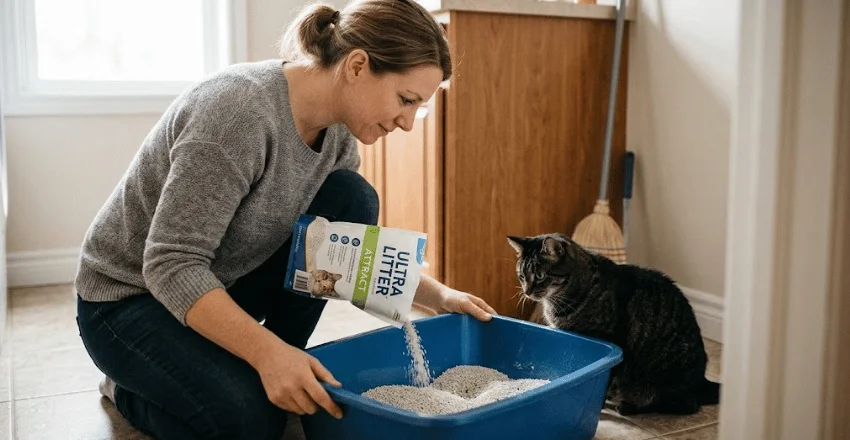
It can work for some cats, but results depend on the reason for avoidance. Recent retailer reviews include many positive experiences and some clear failures. That mixed pattern makes sense because no single product can address every cause. One third-party tester also reported positive results, though that is not controlled veterinary research.
Veterinary sources connect house soiling with pain, urinary disease, stress, location preferences, dirty boxes, and litter aversion. An attractant addresses only part of that list. If the real problem is arthritis or urinary discomfort, a training formula cannot fix it. The same applies when another cat blocks access to the box.
How the Herbal Attractant Fits Into Training
The manufacturer says herbs, particle size, and texture combine to make the box appealing. The effect is behavioral, not medicinal. A cat may investigate because the substrate feels and smells acceptable. Consistent scooping helps preserve that positive association.
A second box also gives the cat a choice when one location feels unsafe. That matters in multi-cat homes or homes with noisy appliances. A quiet box with clear escape routes can reduce one source of resistance. The attractant then supports a setup that already feels usable.
How to Use It Without Missing the Real Problem
- Schedule a vet check for new or sudden accidents, especially if your cat seems uncomfortable.
- Start with a clean, dry box in a quiet and easy-to-reach location.
- Follow the product label and begin with the recommended litter depth.
- Scoop at least daily, and follow the manufacturer’s twice-daily guidance when possible.
- Track where accidents happen and whether your cat prefers certain surfaces or locations.
- If avoidance continues, test one variable at a time, including box type, location, or depth.
The product label says to fill a clean, dry box with three to four inches of litter. Veterinary behavior guidance often favors shallower depths for many cats. VCA also recommends comparing setups to learn an individual cat’s preference. If your cat resists one depth, try another box instead of forcing one setup.
Cat Attract, Litter Additive, Kitten Formula, or Crystal Formula?
| Option | What it contains | When it may fit |
|---|---|---|
| Cat Attract | Clumping natural clay plus herbal attractant | Adult cats needing retraining or added box appeal |
| Ultra Litter Attractant | Natural herbal attractant added to compatible litter | Cats comfortable with unscented clumping clay |
| Kitten Attract | Kitten-specific texture and herbal attractant | Kittens from 8 weeks to 1 year |
| Crystal Attract | Silica sand plus hydrolyzed herbs | Owners wanting a crystal formula with attractant |
The full litter makes sense when you are willing to change the substrate. The additive may suit a cat that already likes unscented clumping clay. Dr. Elsey’s says other scents can mask the additive’s smell. For kittens, the brand provides an age-specific option instead of relying on the adult formula.
Build a Litter Box Cats Want to Use
Attractant works better when the rest of the setup respects feline preferences. Cornell, AAHA, and VCA emphasize cleanliness, access, box size, and quiet placement. Many cats prefer fine, unscented clumping litter and uncovered boxes. Individual preferences still matter more than any general rule.
| Setup factor | Practical approach |
|---|---|
| Number of boxes | Provide one per cat, plus one extra when space permits |
| Location | Choose quiet areas away from food, water, and loud appliances |
| Box size | Allow enough room for easy turning and digging |
| Entry height | Consider lower sides for seniors or cats with mobility limits |
| Cleaning | Scoop daily or more often in busy multi-cat areas |
| Changes | Introduce new litter or setups gradually when possible |
Household design matters more for larger, older, or cautious cats. Milsblog’s Maine Coon size guide shows why some cats may need more turning room. Its tortie cat guide also stresses care based on the individual animal. Breed labels should never replace watching how one cat behaves.
A litter-area reset can also accompany a broader home-safety check. Milsblog’s carnation safety guide for cats covers one common household plant concern. The site’s Pets section also collects related feline-care content. Keeping the environment predictable can make behavior changes easier to interpret.
When Litter Box Avoidance Needs a Veterinarian
A sudden change deserves more caution than a long-standing preference issue. Cornell lists urinary problems, kidney disease, diabetes, digestive trouble, and mobility limits among possible causes. Pain can create a negative association with the litter box. A cat may keep avoiding the box after the original problem improves.
Contact a veterinarian promptly for straining, pain, blood, or repeated unsuccessful litter-box trips. A cat that seems weak, stops eating, or acts unusually also needs professional assessment. Don’t treat these signs as a training problem first. Waiting to change the litter can delay needed care.
Do not punish accidents because punishment does not resolve pain, fear, or substrate aversion. Clean soiled areas thoroughly and remove lingering odor. Then make the preferred box easier to access and more appealing. Keep notes so your veterinarian can see when and where the problem occurs.
Frequently Asked Questions
How long does attractant litter take to work?
There is no guaranteed timeline because cats avoid boxes for different reasons. Some cats investigate a new substrate quickly, while others need more time to adjust. Give each setup change enough time to show a pattern. If there is no improvement, reassess medical causes and box preferences.
Can kittens use attractant litter?
Dr. Elsey’s sells Kitten Attract for kittens from 8 weeks to one year. That formula uses a kitten-specific attractant and texture. Very young kittens may need different litter considerations because they explore with their mouths. Ask your veterinarian if a kitten eats litter or has special health needs.
Can I mix an attractant with my regular litter?
Dr. Elsey’s sells Ultra Litter Attractant for use with compatible unscented clumping clay. The company says perfumes or other litter odors can mask the attractant. Follow the product directions instead of adding random amounts. A gradual transition can also reveal which substrate your cat prefers.
Does attractant litter stop urine spraying?
Not necessarily, because spraying can involve territory, stress, or social conflict. Spraying also differs from ordinary elimination outside the box. A veterinarian can help separate marking from medical or litter-box problems. In these cases, environmental changes may matter more than the litter.
Is cat attract litter safe for cats?
It is marketed for feline litter-box use and contains natural clay and herbs. Cats with respiratory problems, allergies, or litter-eating behavior may need individualized veterinary advice. Stop using a product that appears to trigger coughing, irritation, or unusual behavior. Ask your veterinarian before trying another formula after a concerning reaction.
The Bottom Line
If your cat avoids the box, use Cat Attract as a structured trial rather than a single fix. Pair it with clean boxes, quiet placement, and careful observation. Watch for medical warning signs throughout the process. Persistent or sudden problems deserve veterinary input instead of endless product switching.
Start by setting up one clean, accessible box today. Record what your cat uses and when accidents happen. Note any signs of discomfort, stress, or conflict with other pets. That simple log gives you better evidence for the next adjustment or veterinary visit.
