



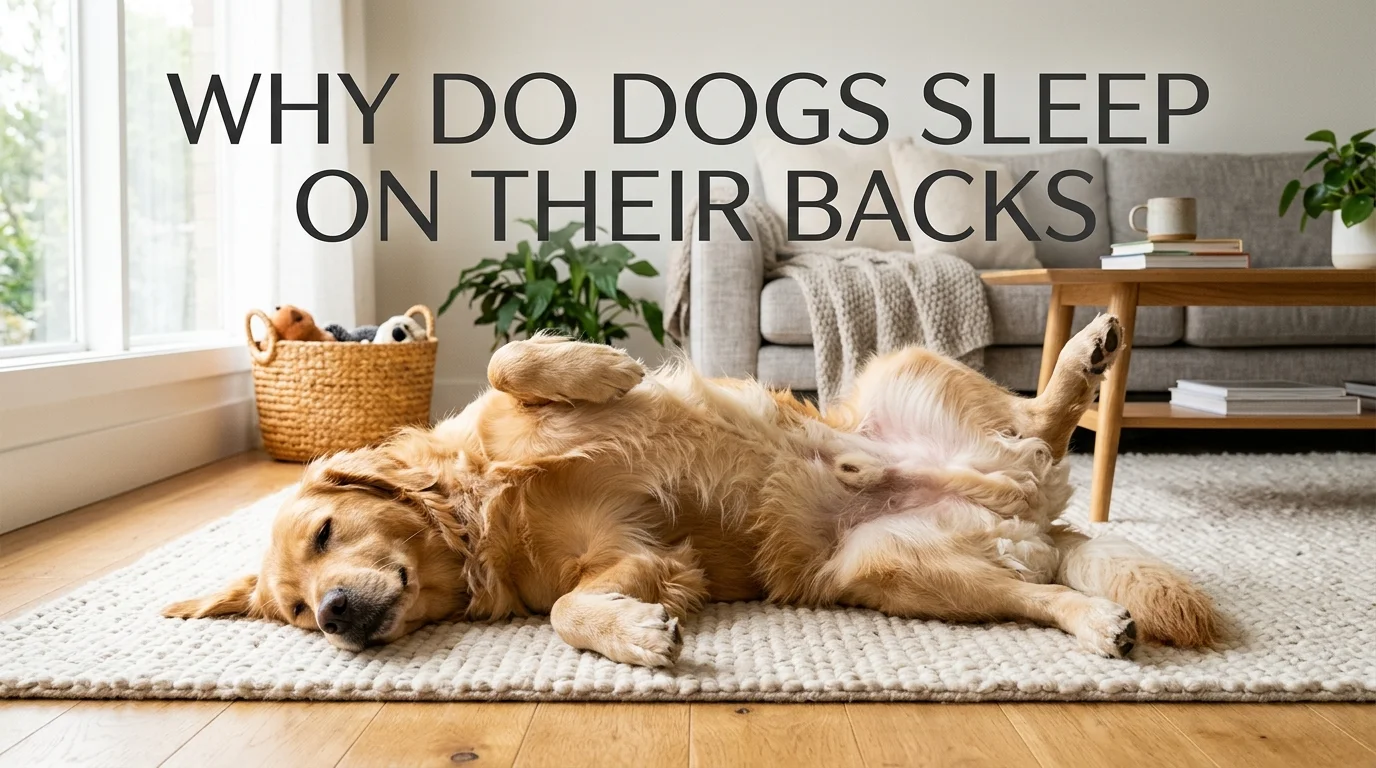
If you wonder why do dogs sleep on their backs, the answer is usually reassuring. Belly-up sleep often reflects comfort, security, cooling, or simple preference. Most healthy dogs choose this position because it feels good.
Quick answer: Dogs usually sleep on their backs because they feel safe, comfortable, and warm enough to expose their bellies. The position can improve airflow around thinner belly fur and paw pads. It may also reduce pressure on certain muscles and joints. In most healthy dogs, belly-up sleep is normal.
| What you notice | What it commonly means |
|---|---|
| Belly exposed and body loose | Relaxation and security |
| Legs raised or spread apart | Comfort and heat release |
| Sleeping near you | The dog feels safe in that setting |
| Back sleeping during warm weather | Cooling may be a factor |
| Twitching paws during sleep | Often normal dream-related movement |
| Sudden discomfort or abnormal breathing | Veterinary advice may be appropriate |
Why Do Dogs Sleep on Their Backs? The Main Reasons
Back sleeping can have several explanations, and more than one may apply at once. Temperature, body comfort, surroundings, and individual habits all influence sleeping positions. Looking at your dog’s whole body gives more information than the position alone.
1. They feel safe enough to relax
A sleeping dog is less ready to react quickly to nearby activity. Exposing the abdomen also leaves a sensitive area uncovered. A loose, belly-up posture can therefore suggest strong comfort with the surroundings.
The American Kennel Club notes that sleeping on its back often reflects relaxation and security. A dog resting beside you may feel especially settled there. This doesn’t mean every trusting dog must sleep that way.
Dogs express security in many ways, including relaxed muscles and steady breathing. Some prefer sleeping on their sides or curling against furniture. Personality, age, temperature, and habit can all influence those choices.
For more canine behavior reading, MilsBlog also covers stubborn dog breeds and common behavior challenges. Interpret sleeping posture through behavior rather than human assumptions. Context usually matters more than one isolated signal.
2. They may be trying to cool down
Dogs control heat differently from people, so posture can affect comfort. Their bellies usually have less insulating fur than their backs. Exposing that area can increase airflow around the body.
Dogs also have sweat glands associated with their paw pads. Raising their feet may expose those areas to more moving air. Panting remains their main cooling method during warmer conditions.
You may notice more belly-up naps during warmer U.S. summers. The same dog might curl tightly during colder months. That seasonal change can be completely normal.
3. The position may simply feel comfortable
Dogs don’t select every sleeping position for a behavioral reason. Sometimes lying on their back simply feels comfortable in the moment. PetMD notes that individual preference strongly affects how dogs choose to rest.
A back sleeper can stretch the hips, shoulders, and legs without lying on one side. Some dogs may enjoy that open position after exercise. Others switch among several positions during one nap.
Comfort can also change as a dog ages. A position enjoyed during puppyhood might become less appealing later. Gradual changes aren’t automatically concerning.
4. They are deeply relaxed
Dogs frequently change posture as they move between resting and deeper sleep. A loose belly, floppy paws, and relaxed facial muscles often accompany comfortable rest. Small twitches may appear while the dog remains asleep.
Dogs experience rapid-eye-movement sleep, during which they may dream and make small movements. Paw twitches or brief leg movements are often normal during sleep. Strong or unusual episodes deserve closer observation.
Adult dogs commonly spend a large portion of each day sleeping. Puppies and older dogs often need even more rest. Normal sleep needs also vary with breed and daily activity.
5. It can become a personal habit
Some dogs discover a preferred sleeping pose and keep using it. One dog may consistently curl into a ball. Another may spend every afternoon upside down on the couch.
This habit doesn’t necessarily reveal a fixed personality trait. Sleeping positions change with room temperature, bedding, noise, and physical comfort. Watch patterns rather than assigning one meaning to every pose.
A dog can also feel secure without ever becoming a back sleeper. PetMD notes that sleeping position reflects in-the-moment preference. A happy household dog doesn’t need a required posture.
What Does Sleeping With the Legs in the Air Mean?
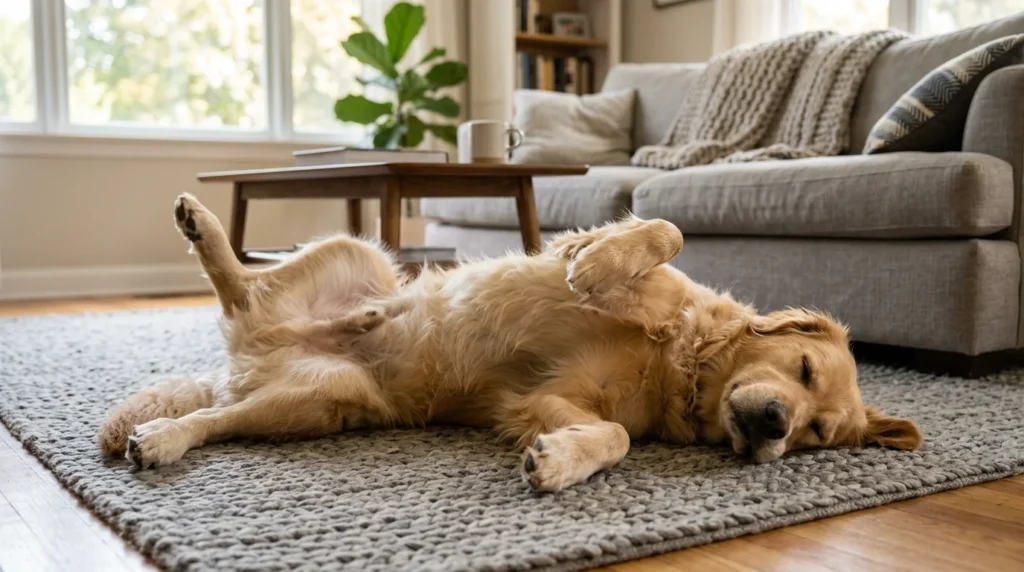
Legs in the air usually represent the same belly-up sleeping position. The limbs go limp because the dog isn’t supporting its body weight. That relaxed appearance can make the pose look stranger than it feels.
Raised paws may also help during warm conditions. An open posture lets air reach the belly and paw pads more easily. The dog may switch positions once the room becomes cooler.
A comfortable dog should still breathe normally while sleeping this way. AKC veterinary guidance says most dogs can breathe safely on their backs. Dogs generally change position when a posture becomes uncomfortable.
Sleeping Belly-Up Is Different From Rolling Over While Awake
An awake dog on its back may communicate something different. Rolling over can occur during play, greetings, social interactions, or moments of uncertainty. You need to read the rest of the body language.
A loose body and playful movement may signal friendly interaction. A tense body, tucked tail, or worried expression may indicate discomfort. Rolling onto its back isn’t automatically an invitation to touch.
Veterinary behavior guidance recommends caution before assuming every exposed belly requests a rub. Some dogs prefer space, especially around unfamiliar people. Give the dog a choice instead of reaching immediately.
When Should Back Sleeping Concern You?
The sleeping position alone usually isn’t a problem. Focus on sudden changes combined with other unusual signs. Your dog’s normal routine is the best point of comparison.
Contact your veterinarian when a sleep change appears alongside any of these symptoms.
- Labored or unusually noisy breathing.
- Persistent panting in a comfortable room.
- Repeated restlessness or inability to settle.
- Pain when standing, lying down, or changing position.
- Unusual weakness or reduced interest in normal activities.
- Major changes in appetite, drinking, or bathroom habits.
Changes in sleeping habits can sometimes accompany medical problems. AKC recommends veterinary guidance when established sleep patterns change significantly. Your veterinarian can assess the full picture, not just one sleeping position.
Short-nosed dogs deserve particular attention when breathing seems difficult. Heat can also increase risk for vulnerable dogs. Seek prompt veterinary care for breathing distress or suspected overheating.
What Other Dog Sleeping Positions Can Mean
Dogs rarely use only one sleeping position throughout life. Side sleeping often appears during comfortable, relaxed rest. Curling into a ball may conserve warmth and protect the abdomen.
Stomach-down positions can let a dog rise more quickly. Younger dogs may also stretch flat after active play. None of these positions provides a complete emotional diagnosis on its own.
Think about temperature, location, recent activity, and body language together. A change from one position to another can simply reflect comfort. Patterns become more meaningful when paired with other behavioral or health changes.
How to Help Your Dog Sleep Comfortably
Start with a quiet resting place where your pet can choose a comfortable posture. Keep fresh water available and maintain a safe indoor temperature. Let your dog move between bedding and cooler flooring when appropriate.
A bed should offer enough room for the dog’s preferred sleeping style. Larger sprawlers need space to extend their legs. Older pets may benefit from supportive bedding recommended for their individual needs.
Avoid waking a sleeping dog only to change its position. Letting resting animals sleep undisturbed reduces unnecessary stress. Supervise elevated furniture when a deep sleeper could roll near an edge.
You can browse more pet care guides from MilsBlog for related household topics. Multi-pet homes may also find MilsBlog’s cat and flower safety guide useful. Good pet care starts with noticing ordinary behavior before something changes.
Frequently Asked Questions
Why do dogs sleep on their backs with their legs in the air?
They often feel relaxed, safe, or warm when choosing this position. Raised legs and an exposed belly may increase airflow around less-insulated areas. For most healthy pets, the posture is normal.
Does a dog sleeping on its back mean it trusts you?
It can indicate that the dog feels secure in its surroundings. Sleeping exposes the abdomen and reduces readiness to react quickly. Still, don’t judge trust by one sleeping posture alone.
Is it bad for a dog to sleep on its back?
Usually, no. Most dogs change position if they become uncomfortable or need to move more easily. Contact a veterinarian if the posture is accompanied by breathing trouble, pain, or another sudden change.
Why doesn’t my dog ever sleep belly-up?
Not every dog prefers the position. Age, temperature, breed traits, bedding, and personal preference may affect sleep posture. Side sleeping or curling up can be equally normal.
Should I give my dog a belly rub when it rolls over?
Not automatically. An awake rollover may reflect play, appeasement, uncertainty, or interest in attention. Watch the whole body and let the dog choose whether contact continues.
The Bottom Line
So, why do dogs sleep on their backs? Most do it because they feel comfortable, secure, cool, or physically relaxed. The position itself is rarely a reason for concern.
Pay more attention to changes in breathing, movement, behavior, and daily routines. Those details tell you more than sleeping posture alone. When something suddenly seems different, your veterinarian can help determine whether it matters.
For everyday behavior, let your dog choose the sleeping position that feels comfortable. Keep the resting area safe, cool, and spacious enough to allow position changes. A peaceful upside-down nap is usually exactly what it looks like: a comfortable dog getting some rest.
