




Quick answer: Yes, are carnations toxic to cats is a common concern for pet owners, and carnations are generally considered mildly toxic rather than highly poisonous. Eating a carnation may cause vomiting, diarrhea, or skin irritation. If your cat chews or swallows part of one, remove the flower and contact your veterinarian or a pet poison-control service for guidance.
Carnations are common in birthday bouquets, Valentine’s arrangements, grocery-store flower displays, and home gardens, which makes accidental exposure easy for curious cats. However, their colorful, ruffled petals may look harmless, but cat owners should not treat them as pet-safe; our other pet care and cat safety guides cover the same ground for other plants and household hazards. Overall, understanding the difference between a mildly toxic carnation and a much more dangerous flower, such as a true lily, can help you respond appropriately without underestimating the risk.
Are Carnations Toxic to Cats?
Yes, carnations are toxic to cats. The ASPCA Animal Poison Control Center lists the common carnation, scientifically known as Dianthus caryophyllus, as toxic to cats, dogs, and horses, with mild gastrointestinal problems and mild dermatitis named as the expected clinical signs. Meanwhile, the ASPCA also lists carnation under names such as pinks, wild carnation, and Sweet William.
The reassuring part is that carnations are generally associated with irritation and digestive upset rather than the severe organ damage caused by some other toxic plants. Pet Poison Helpline includes carnations among flowers that can cause gastrointestinal irritation but are not expected to produce the systemic kidney, liver, or nervous-system toxicity associated with more dangerous plants. Even so, “mildly toxic” does not mean a cat should be allowed to chew or eat them.
How Toxic Are Carnations to Cats?
Carnation exposure is usually considered a relatively low-level poisoning risk compared with highly toxic flowers. A small bite may cause no obvious symptoms or temporary digestive or skin irritation, while a larger exposure warrants more careful veterinary assessment. How a particular cat responds can depend on factors such as the amount eaten, existing health problems, and whether other flowers or substances were involved. Body size matters too, since the same mouthful of petals is a far larger dose for a kitten than for one of the record-breaking Maine Coons at the top end of the domestic-cat range.
The ASPCA identifies the toxic principle in Dianthus caryophyllus as an “unknown irritant,” which means no single chemical has been conclusively established as the cause of carnation toxicity. Some veterinary-reviewed secondary sources discuss compounds found in Dianthus plants, but the primary ASPCA listing remains more cautious about the exact toxic agent. For cat owners, the takeaway is simple: avoid intentional exposure, regardless of which compound causes the irritation.
Symptoms of Carnation Poisoning in Cats
The most commonly recognized problems after carnation exposure involve the digestive system and skin. Symptoms are usually milder than those associated with serious plant poisonings, but persistent vomiting or diarrhea can still become concerning because cats may lose fluids and become dehydrated. Watch your cat closely after any known or suspected exposure, rather than assuming a mild classification means there will be no reaction.
Possible signs include the following.
- Vomiting.
- Diarrhea.
- Mild gastrointestinal discomfort.
- Drooling or mouth irritation.
- Reduced interest in food.
- Mild redness or skin irritation after contact with the plant.
- Licking or grooming an irritated area more than usual.
Not every cat that bites a carnation will develop all of these symptoms, and the ASPCA’s primary carnation listing specifically highlights mild gastrointestinal signs and mild dermatitis. More dramatic signs such as seizures, trouble breathing, collapse, or severe weakness are not typical signs of uncomplicated carnation exposure and require prompt veterinary attention because another toxin or medical problem may be involved. Cornell University’s Feline Health Center recommends contacting a veterinarian promptly when poisoning is suspected, rather than trying to diagnose the toxin from symptoms alone.
What Should I Do If My Cat Ate a Carnation?
If your cat has eaten a carnation, first remove the remaining flowers so your cat cannot consume more. Check the bouquet or plant label, if available, and keep a sample or photograph because accurate plant identification can make poison-control advice more useful. Contact your veterinarian for individualized guidance, especially if you don’t know how much your cat swallowed or if your cat is already showing symptoms.
A sensible response is to:
- Take the carnation away. Prevent any additional chewing or ingestion.
- Check the entire bouquet. Identify every flower and plant in the arrangement rather than focusing only on the carnation.
- Save identifying information. Keep the plant tag, bouquet label, photograph, or a safe sample for your veterinarian.
- Call your veterinarian. Explain what your cat ate, approximately how much, when it happened, and whether symptoms are present.
- Contact poison control when needed. In the United States, you can reach ASPCA Animal Poison Control at (888) 426-4435 and Pet Poison Helpline at (855) 764-7661; consultation fees may apply.
Do not try to make your cat vomit unless a veterinarian or animal poison expert specifically instructs you to do so. Cornell University warns pet owners not to induce vomiting without professional direction because vomiting can sometimes create additional harm depending on the substance involved. Do not let home remedies replace professional advice if you are unsure what your cat swallowed.
When Should You Call a Veterinarian?
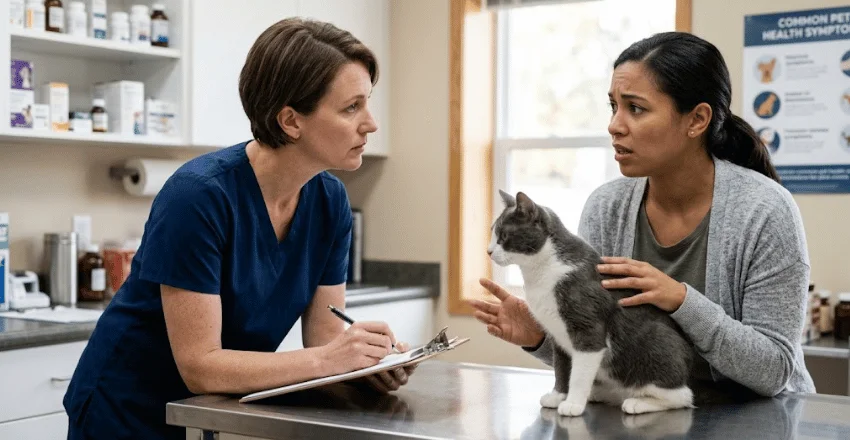
Call your veterinarian whenever you know your cat has swallowed a toxic plant and you are unsure about the amount or the expected reaction. Veterinary advice becomes especially important if vomiting or diarrhea is repeated, your cat seems unusually tired, refuses food or water, or symptoms appear to be getting worse rather than better. Kittens, senior cats, and cats with existing medical conditions may also warrant a lower threshold for professional evaluation.
Seek urgent veterinary care if your cat has difficulty breathing, collapses, experiences seizures, becomes severely weak, or develops other significant abnormalities. Those signs are not what the ASPCA describes as the usual response to carnations, so their presence may indicate a more serious exposure, another flower in the bouquet, or an unrelated emergency. When you call, tell the veterinarian about every possible plant or chemical involved instead of assuming the carnation is the only concern. the only concern.
Carnations vs. Lilies: The Difference Matters
Do not treat carnations and true lilies as equivalent risks for cats. Carnations primarily cause mild digestive and skin irritation, while true lilies in the Lilium and Hemerocallis groups can cause acute kidney injury in cats and require emergency veterinary care.
The US Food and Drug Administration warns that a cat can develop fatal kidney failure in less than three days from a true lily. Eating a small piece of leaf or petal, licking a few pollen grains off its fur, or drinking the vase water is enough, and the agency puts the onset of kidney failure at 24 to 72 hours after ingestion. Pet Poison Helpline stresses that even small exposures to dangerous lilies can have devastating consequences.
| Flower exposure | Typical concern for cats | General level of urgency |
|---|---|---|
| Carnation | Mild gastrointestinal upset or dermatitis | Contact a vet or poison-control service for guidance |
| True lily | Potentially severe kidney damage | Veterinary emergency |
| Rose (Rosa spp.) | ASPCA lists as non-toxic | Usually low toxicity risk, although thorns can injure |
| Sunflower | ASPCA lists as non-toxic | Usually low toxicity risk |
This distinction is especially important with mixed bouquets because a cat owner may recognize the carnations while overlooking a lily tucked between other flowers. while, Do not assume an entire arrangement is only mildly toxic because carnations are present. Identify every species before leaving a bouquet within a cat’s reach.
Are Carnation Petals, Leaves, and Stems Safe for Cats?
No part of a carnation should be treated as an appropriate snack for a cat. The ASPCA classifies the carnation plant as toxic and does not identify any part that owners can safely allow cats to chew. Moreover, the safest approach is therefore to keep petals, stems, leaves, clippings, and fallen flower material inaccessible.
The same cautious approach applies to dried carnations because drying a flower should not be assumed to make a toxic or irritating plant safe. No strong primary-source evidence shows dried carnation material is harmless to cats, so it is best to prevent access. Additionally, Potpourri and dried arrangements may contain oils, fragrances, preservatives, or other plants that create separate risks.
Is Carnation Vase Water Safe for Cats?
Cats should not be allowed to drink water from a vase containing carnations or other cut flowers.
Vase water may contain plant material, commercial flower food, preservatives, bacteria, or residues from several species in a mixed arrangement. Overall, A separate bowl of clean, fresh drinking water is the safer option for your cat.
The concern becomes greater when you cannot identify every flower in the vase. Some arrangements include species that are far more toxic than carnations, so you can’t base the risk assessment on carnations alone. Keeping flower vases out of reach also prevents cats from knocking them over, chewing stems, or swallowing fallen petals.
Cat-Safe Flower Alternatives to Carnations
Additionally, if you enjoy fresh flowers but live with a cat that investigates everything, choosing flowers listed as non-toxic can reduce avoidable risk. The ASPCA identifies roses in the Rosa genus and sunflowers such as Helianthus angustifolius as non-toxic to cats, and it also lists several orchid species as non-toxic. Always verify the exact species because common flower names can refer to unrelated plants with very different toxicity profiles.
Possible alternatives include:
- Roses (Rosa spp.): ASPCA-listed as non-toxic to cats, although sharp thorns can still cause physical injury.
- Sunflowers: the ASPCA lists sunflower varieties such as Helianthus angustifolius as non-toxic to cats.
- Certain orchids: multiple orchid species in the ASPCA plant database are classified as non-toxic to cats.
Even non-toxic plants can cause stomach upset if a cat eats enough plant material. Pet Poison Helpline notes that ingesting plant matter can sometimes irritate the gastrointestinal tract, regardless of whether the plant contains a recognized toxin. Moreover, Non-toxic therefore means a lower poisoning risk, not an invitation to let a cat eat bouquets.
How to Keep Cats Away From Carnations and Other Flowers
Additionally, Prevention is usually easier than dealing with suspected poisoning after the fact. Cats are excellent climbers, so simply moving flowers from a coffee table to a countertop may not be enough for a determined pet. However, A closed room, an inaccessible display cabinet, or choosing cat-safe flowers altogether provides more dependable protection.
Helpful precautions include:
- Check the ASPCA toxic and non-toxic plant database before buying flowers.
- Ask florists for the exact species used in mixed bouquets.
- Avoid bringing true lilies into a home with cats.
- Pick up fallen leaves and petals promptly.
- Do not leave bouquets on surfaces your cat regularly reaches.
- Keep vase water inaccessible.
- Provide appropriate enrichment so household plants are less tempting.
- Save plant labels when introducing a new flower or houseplant.
Mixed bouquets deserve particular attention because the most dangerous flower may not be the one that initially catches your eye. True lilies can be far more hazardous to cats than carnations, while other common bouquet components may have their own toxic effects. Checking every plant before bringing an arrangement home is safer than judging the bouquet by its most recognizable flower.
Frequently Asked Questions
Are carnations poisonous to cats if they eat only one petal?
A single petal may cause little or no visible reaction in some cats, but carnations are still classified as toxic by the ASPCA. Because no universal amount is guaranteed safe for every cat, monitor your pet and contact your veterinarian if you are concerned. The situation is more urgent if you cannot confirm the flower was actually a carnation or if other toxic flowers were present.
Can carnations kill cats?
Carnations are generally associated with mild irritation rather than the severe systemic poisoning seen with plants such as true lilies. Pet Poison Helpline describes carnations as capable of causing gastrointestinal irritation while not being expected to cause systemic kidney, liver, or nervous-system toxicity. Nevertheless, any cat that develops significant or worsening symptoms should receive veterinary advice rather than being managed solely on the assumption that the exposure is mild.
Are pink carnations toxic to cats?
Yes, the color of a common carnation does not make the plant pet-safe. Keep pink, red, white, and other cultivated colors of Dianthus caryophyllus away from cats, rather than assuming a particular color is less toxic. Accurate species identification matters more than the color of the flower.
Is Sweet William toxic to cats?
The ASPCA lists Sweet William among the common names associated with its Dianthus caryophyllus carnation entry and classifies it as toxic to cats. The ASPCA lists expected signs as mild gastrointestinal problems and mild dermatitis. Because common plant names can sometimes overlap across different species, use the scientific name whenever possible when discussing an exposure with a veterinarian.
Can cats be in the same room as carnations?
Simply being in a room with a carnation differs from eating it or making significant contact with it, but a reachable bouquet creates an unnecessary opportunity for exposure. Cats can jump onto shelves, counters, and tables owners may think are inaccessible, so separation should be practical, not assumed. If your cat routinely chews plants, choosing a verified non-toxic flower is the safer long-term approach.
What should I tell the veterinarian if my cat ate a flower?
Tell the veterinarian the plant’s name if known, approximately how much may have been eaten, when the exposure occurred, and what symptoms you have noticed. A photograph, label, or plant sample can help with identification, and Cornell recommends bringing or describing the suspected toxin when seeking professional assistance. Mention every flower in a mixed bouquet because treatment urgency can change dramatically if something more toxic than a carnation was involved.
The Bottom Line
So, are carnations toxic to cats? Yes, the ASPCA considers Dianthus caryophyllus toxic to cats, although the usual effects are relatively mild gastrointestinal upset and skin irritation rather than severe systemic poisoning. Keep carnations out of reach, contact a veterinarian or animal poison-control service after a concerning ingestion, and treat any bouquet containing an unidentified plant or true lily with extra caution.
Choosing verified cat-safe flowers is the easiest way to enjoy arrangements without creating an avoidable source of worry. Roses, sunflowers, and several orchid species offer alternatives that the ASPCA lists as non-toxic to cats, although eating large amounts of any plant can still upset a cat’s stomach. A quick species check before bringing flowers home can prevent a much more stressful call to the emergency veterinarian.
