



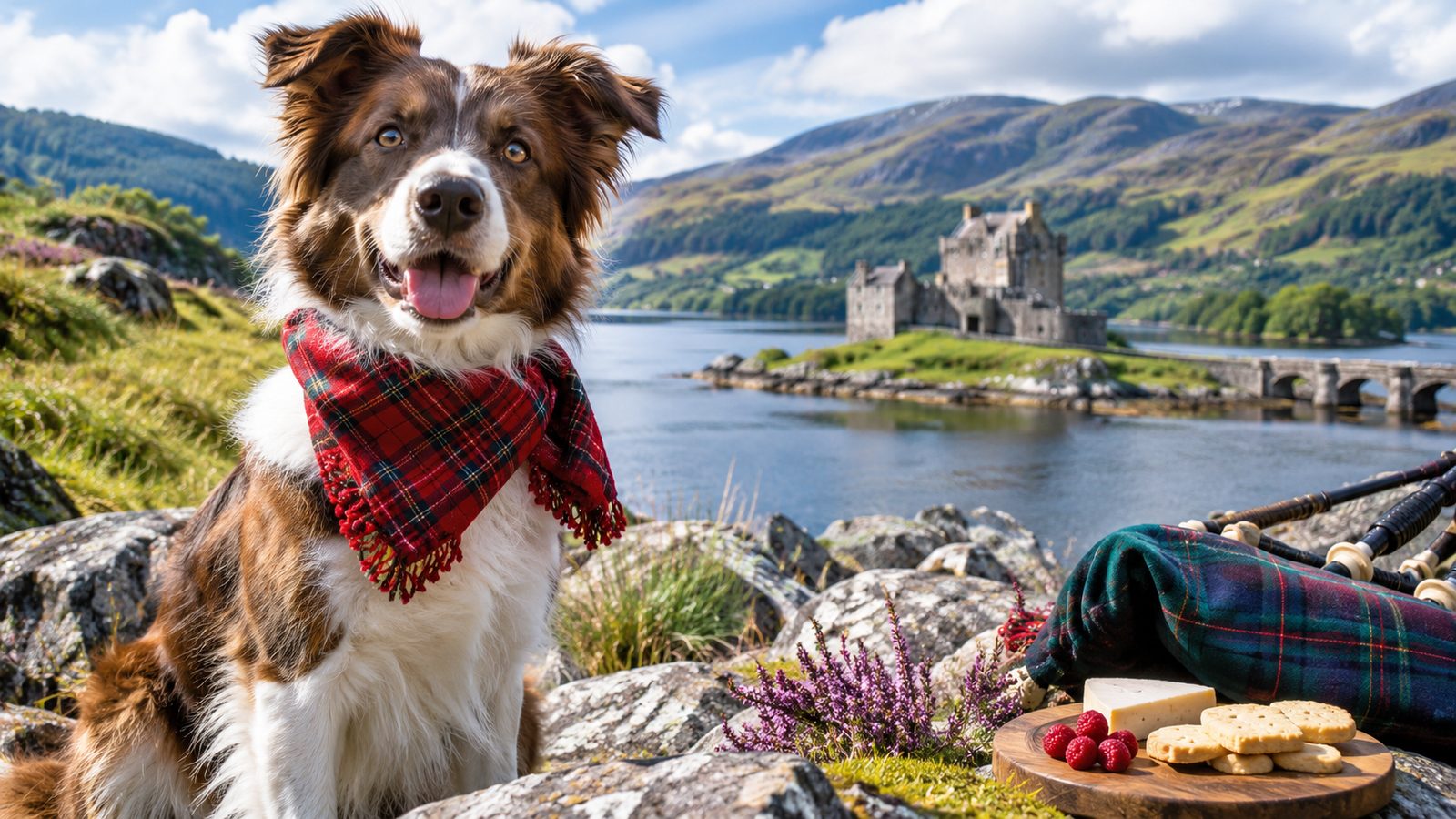
Finding a name with Scottish character gives your new pup plenty of personality from day one. Scottish dog names can draw from Gaelic, rugged places, famous people, traditional foods, and familiar first names. This collection gives U.S. owners meaningful choices without relying on stereotypes or questionable translations. Quick answer: Scottish dog names can come from Gaelic words, islands, cities, whisky, foods, historic figures, and traditional first names. Strong choices include Skye, Angus, Bonnie, Alba, Talisker, Burns, and Catriona. The best pick is easy to say, distinct from commands, and suited to your dog’s personality.
| Theme | What you’ll find | Good starting picks |
|---|---|---|
| Scottish Gaelic | Real Gaelic words with meanings and pronunciation hints | Alba, Dubh, Mòr |
| Places and landmarks | Islands, lochs, rivers, towns, and Highland scenery | Skye, Lomond, Glencoe |
| Whisky and food | Distilleries, dishes, ingredients, and Scottish treats | Talisker, Haggis, Cranachan |
| History and literature | Writers, leaders, inventors, and notable Scots | Burns, Wallace, Stevenson |
| Male names | Familiar Scottish masculine choices | Angus, Hamish, Fergus |
| Female names | Traditional and modern feminine choices | Bonnie, Fiona, Catriona |
Key takeaways
- This guide contains 60 names, with 10 choices in each requested theme.
- The Gaelic section uses genuine Scottish Gaelic words rather than invented translations.
- Pronunciation hints are simplified for English-speaking U.S. readers.
- Gaelic pronunciation varies somewhat by region and speaker.
- Short, distinct names often work well during everyday training.
Scottish Dog Names From Gaelic Words and Their Meanings
Scottish Gaelic gives you names with clear meanings tied to color, landscape, size, and Scotland itself. The meanings below follow modern Scottish Gaelic learning resources, including LearnGaelic. Pronunciation hints are intentionally simple rather than formal linguistic transcriptions.
- Alba, Scotland. Pronounce it roughly AL-uh-puh. It works especially well for a dog whose name should represent Scotland directly.
- Dubh, black or dark. Say it approximately doo. This is an especially fitting choice for a black-coated pup.
- Geal, white. A simple approximation is gyal. It can suit a white, cream, or pale-coated dog.
- Ruadh, reddish-brown or ginger. Say it roughly ROO-uh. Consider it for a copper, red, or rust-colored coat.
- Beag, small or little. Pronounce it approximately behk. It makes a playful choice for a compact dog.
- Mòr, big, great, or large. Say it approximately mohr. The name suits a large breed or an unusually bold little dog.
- Uisge, water. Pronounce it roughly OOSH-kuh. Water-loving retrievers and swimming breeds could wear it well.
- Fiadh, deer. Say it approximately FEE-uh. The light sound fits an agile or gentle dog.
- Eilean, island. Pronounce it approximately EL-un. It has a softer sound while keeping a clear Highland connection.
- Sruth, stream or current. Say it roughly stroo. It suits an energetic dog that always seems to be moving.
LearnGaelic lists dubh as black, geal as white, and ruadh as reddish-brown or ginger. It also defines mòr as big and beag as small. Its place vocabulary confirms eilean for island and uisge for water. Simplified pronunciation can never capture every Gaelic sound perfectly. Regional accents and individual speakers can differ. Owners who want the native sound can use LearnGaelic’s dictionary audio before settling on a pronunciation.
Scottish Places and Landmarks That Make Memorable Names
Scotland’s geography produces short names that feel natural when called across a yard or dog park. Islands are especially useful because many have one or two syllables. Mountains, lochs, rivers, and historic towns provide plenty of alternatives.
- Skye, after the Isle of Skye in the Inner Hebrides.
- Arran, inspired by the Isle of Arran in the Firth of Clyde.
- Iona, the small Hebridean island known for its historic abbey.
- Islay, the Hebridean island famous for scenery and whisky production.
- Lomond, after Loch Lomond, one of Scotland’s most familiar loch names.
- Stirling, the historic Scottish city associated with its castle and nearby battlefields.
- Fife, a Scottish council area with a crisp, one-syllable name.
- Ayr, inspired by the town and river on Scotland’s southwest coast.
- Clyde, after the River Clyde, which runs through Glasgow.
- Glencoe, after the dramatic Highland glen known for its mountains and history.
Place-inspired choices work well because they can carry personal meaning without sounding overly formal. A family with Scottish roots might choose an ancestral region. Travelers may prefer the island or town they remember most. American owners should also consider how a place name sounds in daily conversation. Skye, Clyde, Fife, and Arran are especially straightforward. Longer choices such as Glencoe still remain easy to distinguish from common training commands.
Whisky and Scottish Food Names for Dogs
Scottish food and whisky provide some of the most playful options in this collection. Several whisky names are geographic names too, but they are used here for their distillery associations. Food choices can be especially fun for dogs with big appetites or comic personalities.
- Talisker, after the well-known Isle of Skye whisky distillery.
- Macallan, inspired by The Macallan, a Speyside single malt producer.
- Glenlivet, after the Speyside distillery and whisky name.
- Ardbeg, inspired by the Islay distillery known for heavily peated whisky.
- Haggis, after Scotland’s famous savory dish.
- Tattie, a Scots word commonly used for potato.
- Neeps, the familiar Scots term used for turnips or swedes in traditional meals.
- Cranachan, after the Scottish dessert made with ingredients including cream and raspberries.
- Bannock, inspired by a traditional style of Scottish bread or flat cake.
- Cullen, a nod to Cullen skink, the Scottish smoked-fish soup.
Whisky-inspired names do not need to imply anything about giving alcohol to pets. Alcohol is unsafe for dogs and should remain out of reach. Here, the names simply reference Scottish producers and cultural associations. Food names tend to sound affectionate because they are familiar household words. Haggis has a comic edge, while Bannock sounds more traditional. Cullen offers a subtler connection for owners who want something less obvious.
Names Inspired by Scottish History and Literature
Scotland has produced writers, political figures, scientists, inventors, and folk heroes known far beyond Britain. Their surnames can make strong pet names without needing a lengthy explanation. Many are also easy for American families to pronounce.
- Burns, for poet Robert Burns, one of Scotland’s defining literary figures.
- Scott, for novelist and poet Sir Walter Scott.
- Wallace, for William Wallace, the medieval Scottish leader.
- Bruce, for Robert the Bruce, King of Scots.
- Flora, for Flora MacDonald, remembered for helping Charles Edward Stuart escape after Culloden.
- Stevenson, for Robert Louis Stevenson, author of Treasure Island and Kidnapped.
- Doyle, for Edinburgh-born writer Arthur Conan Doyle, creator of Sherlock Holmes.
- Barrie, for J. M. Barrie, the Scottish author associated with Peter Pan.
- Hume, for philosopher and historian David Hume.
- Watt, for Scottish engineer and inventor James Watt.
This category works particularly well when the figure has personal significance for your family. Burns may appeal to poetry readers, while Stevenson fits adventure fans. Wallace or Bruce can give a large, confident dog a suitably strong name. Literary inspiration can also connect naturally with other reading on Milsblog. Readers interested in how writers shape language can explore the site’s literary and lyric analysis. Pet owners can also browse Milsblog’s guide explaining why dogs sleep on their backs.
Scottish Male Names for Dogs
Traditional human names often make the easiest everyday pet names. They sound natural at home, at the veterinarian, and during training. These choices range from unmistakably Scottish favorites to names familiar across the United States.
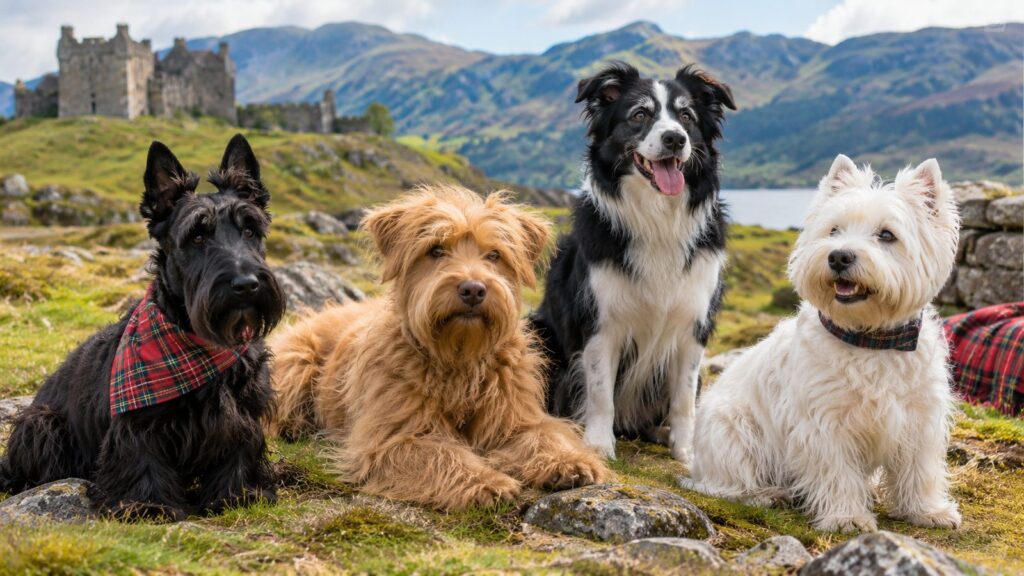
- Angus, a classic Scottish choice with a strong, friendly sound.
- Hamish, the Scottish form associated with James.
- Fergus, an old Gaelic-derived personal name with deep Scottish use.
- Callum, a popular Scottish form connected with the name Columba.
- Duncan, a historic Scottish name carried by kings and literary characters.
- Malcolm, another traditional Scottish royal name.
- Fraser, a Scottish surname that works naturally as a first name.
- Gordon, a long-established Scottish surname and given name.
- Lachlan, a Scottish name with Highland associations.
- Ewan, a familiar Scottish masculine name that is short and easy to call.
Angus and Hamish create an immediate Scottish impression for many U.S. readers. Callum and Ewan feel softer and more contemporary. Fraser or Gordon may suit owners who prefer surname-style choices. Your dog’s appearance does not need to determine the name. A tiny terrier can be Malcolm, while a Great Dane can be Callum. Sound and personal preference matter more than matching a name to breed size.
Scottish Female Names for Dogs
Scottish feminine names range from short and playful to traditional and elegant. Many are already familiar enough that American veterinarians and trainers can say them easily. Others offer a stronger connection with Scottish language and culture.
- Bonnie, a familiar Scots-inspired choice associated with prettiness or attractiveness.
- Maisie, a Scottish diminutive associated with Margaret.
- Fiona, a name strongly associated with Scottish usage and literature.
- Shona, a Scottish feminine form related to Joan.
- Morag, a traditional Scottish Gaelic feminine name.
- Elspeth, a distinctly Scottish form of Elizabeth.
- Ailsa, associated with Ailsa Craig off Scotland’s west coast.
- Catriona, a Scottish Gaelic form related to Catherine.
- Kirsty, a familiar Scottish form related to Christine or Christina.
- Mairi, the Scottish Gaelic form associated with Mary.
Bonnie and Maisie feel lighthearted, while Elspeth and Catriona have a more traditional sound. Fiona is familiar throughout the United States without losing its Scottish connection. Mairi gives owners a Gaelic-rooted option that still feels approachable. Say each candidate aloud several times before choosing. Test it beside cues such as “sit,” “stay,” and “come.” A name that remains clear during fast speech will usually be easier to use.
How to Choose a Scottish Name Your Dog Can Learn
A meaningful origin matters, but everyday usability matters too. Choose something you enjoy saying many times each day. Shorter choices are often convenient, although longer names can work with consistent nicknames. Try calling the name from another room before making the decision permanent. Listen for sounds that might resemble another pet’s name or a common command. Distinctive sounds can make communication clearer during training. You can also watch your new dog for several days before deciding. Personality may make one theme feel unexpectedly appropriate. If you are also weighing training, Milsblog’s guide on stubborn dog breeds shows how different temperaments learn.
Frequently Asked Questions
What are some good Scottish dog names for a new puppy?
Good choices include Angus, Bonnie, Skye, Alba, Clyde, Hamish, Fiona, Burns, and Arran. The strongest option is one you can say clearly and consistently. A personal connection to Scotland can make the choice more meaningful.
What is the Scottish Gaelic word for dog?
The Scottish Gaelic word for a dog is cù. SpeakGaelic lists cù for “a dog” and cuilean for “a puppy.” Those terms are useful if you want a name tied directly to the language.
Are Gaelic meanings on pet-name websites always accurate?
No, online name lists sometimes combine Irish Gaelic, Scottish Gaelic, Scots, and modern invented meanings. Similar-looking names can also have disputed etymologies. Checking resources such as LearnGaelic helps prevent repeating unreliable translations.
Are Scottish names only suitable for Scottish dog breeds?
No. A Scottish-inspired name can suit any breed or mixed-breed dog. Owners often choose names because of ancestry, travel memories, literature, culture, or simple preference.
Pick a Name That You’ll Still Love Years From Now
The right name should sound good during quiet evenings and busy trips to the dog park. Scotland offers choices ranging from ancient Gaelic vocabulary to islands, writers, foods, and familiar human names. That variety makes it easy to find something personal without forcing a theme. Start by selecting three or four favorites from the lists above. Say each name during normal household routines for a day. The one that feels effortless will often become the natural choice. —
