



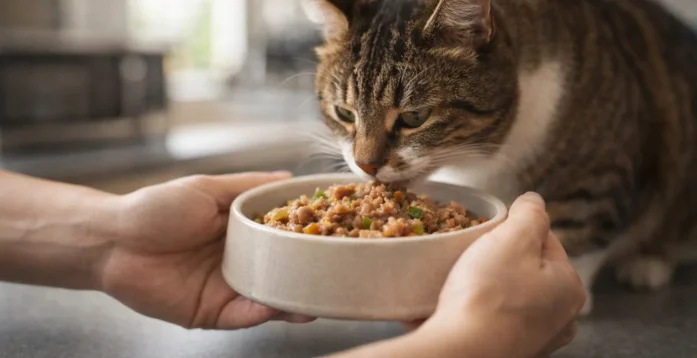
Making meals for your cat gives you control over ingredients, texture, and preparation. However, homemade meals need more planning than cooking plain meat and placing it in a bowl. The safest homemade cat food recipes either serve as occasional toppers or follow a veterinary-formulated nutrition plan.
Cats require specific amounts of protein, taurine, fatty acids, vitamins, and minerals. A simple chicken-and-rice mixture cannot reliably provide everything needed for long-term feeding. Cornell University recommends nutritionally balanced commercial foods unless a veterinarian recommends a properly formulated homemade diet.
| Key point | What cat owners should know |
|---|---|
| Best starting point | Cooked animal protein with simple ingredients |
| Daily homemade diet | Needs veterinary formulation or a suitable feline premix |
| Occasional topper | Keep extras within your cat’s treat allowance |
| Raw meat | Carries additional pathogen risks |
| Important nutrients | Protein, taurine, calcium, fatty acids, vitamins, and minerals |
| Ingredient substitutions | Avoid them in nutritionally formulated recipes |
| Storage | Refrigerate promptly or freeze portions |
| Medical conditions | Ask your veterinarian before changing the diet |
Direct answer: Homemade meals can work for cats, but plain meat recipes are not complete diets. Use simple cooked recipes as occasional toppers unless a veterinary nutritionist formulates the meal. For daily feeding, follow exact ingredient amounts and use every prescribed supplement without substitutions.
What Makes Homemade Cat Food Safe and Balanced?
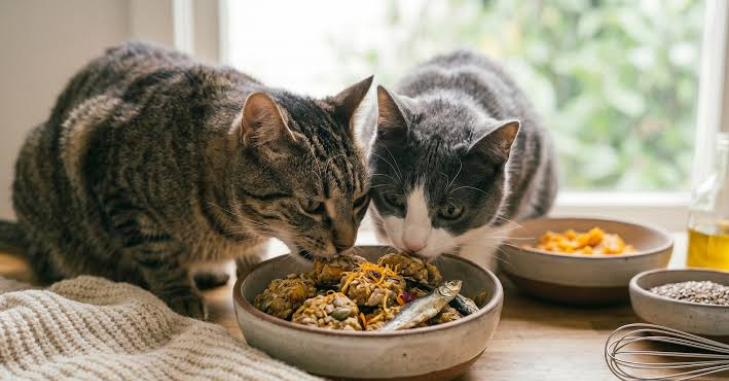
Homemade Cat Food Recipes are for obligate carnivores, so animal-based nutrients are central to their diet. Yet muscle meat alone cannot meet every nutritional requirement. Calcium, taurine, vitamins, minerals, and essential fatty acids must also be supplied in suitable amounts.
AAFCO nutrient profiles cover dozens of nutritional parameters for feline foods. The organization explains that complete feeding requires nutrients in appropriate amounts and ratios. This complexity is why random online combinations can create deficiencies over time.
VCA also warns that ingredient substitutions can disrupt a carefully formulated homemade diet. Even apparently similar meats can contain different nutrient concentrations. A complete recipe should therefore be followed exactly as written.
If you enjoy learning about broader feline care, Milsblog’s tortoiseshell cat care guide covers nutrition alongside health and everyday care. Its Pets section also collects related cat-owner resources. These guides can support a wider home-care routine beyond feeding.
5 Homemade Cat Food Recipes to Try
The first four ideas below work best as occasional toppers or treats. They are not intended to replace a complete daily diet. WSAVA recommends keeping treats below 10% of a healthy cat’s daily calorie intake.
1. Simple Chicken and Pumpkin Topper
This soft chicken mixture works well when you want a simple cooked topping. Pumpkin adds moisture and a small amount of fiber. Keep the serving modest because this mixture is not nutritionally complete.
Ingredients
* 4 ounces boneless, skinless chicken * 1 tablespoon plain pumpkin puree * 1 to 2 tablespoons warm water
Method
1. Cook the chicken thoroughly without salt, onion, garlic, sauces, or seasoning. 2. Let it cool, then chop or shred it into small pieces. 3. Stir in pumpkin and enough water to create your cat’s preferred texture.
Introduce unfamiliar foods gradually when possible. Stop offering a new ingredient if vomiting or diarrhea develops. Cats with digestive disease should receive individualized veterinary advice before diet changes.
2. Turkey and Egg Mini Meal Topper
Turkey and cooked egg provide an appealing protein-rich combination. This recipe is useful for adding variety without using heavily processed human foods. It remains a topper rather than a complete long-term meal.
Ingredients
* 4 ounces lean ground turkey * 1 cooked egg * 1 to 2 tablespoons water
Method
1. Cook the turkey thoroughly in an unseasoned skillet. 2. Cook the egg completely, then finely chop one portion. 3. Combine the ingredients with water and serve a small cooled portion.
Never add onion powder, garlic powder, seasoned broth, or gravy mixes. These products can contain ingredients unsuitable for cats. Plain preparation also makes reactions easier to identify.
3. Chicken and Sardine Flavor Topper
Strong aromas can make food more interesting to selective cats. Sardine can provide flavor without requiring sauces or spices. Choose sardines packed in water and avoid heavily salted varieties.
Ingredients
* 3 ounces cooked boneless chicken * 1 teaspoon mashed sardine in water * 1 tablespoon warm water
Method
1. Chop the cooked chicken into very small pieces. 2. Mash a small amount of sardine and mix it through the chicken. 3. Add warm water and serve after checking the temperature.
Fish should add variety rather than dominate every meal unless your veterinarian recommends otherwise. Rotating toppers can also prevent your cat from expecting one strong flavor. Measure portions so extras do not displace balanced food.
4. Turkey and Pumpkin Pâté
Some cats prefer smooth food instead of chopped meat. This homemade pâté allows you to control texture while keeping the ingredient list simple. It works particularly well as a spoon-sized topper over regular wet food.
Ingredients
* 4 ounces thoroughly cooked turkey * 1 tablespoon plain pumpkin puree * 2 tablespoons warm water
Method
1. Place the cooled cooked turkey and pumpkin in a food processor. 2. Add water gradually until the mixture reaches a pâté texture. 3. Refrigerate unused portions promptly in a covered container.
A change in eating habits can sometimes reflect more than taste preference. Dental pain, nausea, stress, and illness can all affect appetite. Contact your veterinarian if reduced eating continues or accompanies other symptoms.
5. A Complete-Diet Method Using a Feline Premix
Daily homemade feeding requires a different approach from making occasional toppers. One practical option uses cooked meat with a feline vitamin-and-mineral premix designed for homemade diets. The exact meat, water, supplement amount, and serving size must follow that product’s formulation.
Do not estimate supplement quantities or copy measurements from another product. Premixes have different nutrient concentrations and ingredient requirements. VCA advises following professionally formulated recipes precisely because substitutions can cause deficiencies or excesses.
A typical preparation process looks like this:
1. Choose the exact meat specified by your veterinary recipe or premix instructions. 2. Weigh the meat instead of estimating it by volume. 3. Cook it thoroughly unless your veterinary plan specifically states otherwise. 4. Allow the meat to cool before adding heat-sensitive supplements. 5. Add the exact prescribed amount of water, oil, and nutritional premix. 6. Mix the batch thoroughly so supplements are distributed evenly. 7. Divide it according to the calculated daily calorie requirement. 8. Refrigerate short-term portions and freeze the remainder.
This route provides more nutritional control than guessing ingredient ratios. It still requires attention to your cat’s age, weight, body condition, and health. Ask your veterinarian for a veterinary nutrition referral when you want homemade food to become the main diet.
Raw vs. Cooked Homemade Food
Cooked recipes reduce several food-safety concerns associated with raw animal products. The AVMA discourages feeding raw or undercooked animal protein because pathogens can affect animals and people. That concern includes bacteria such as Salmonella, Listeria, and E. coli.
Recent events reinforce that concern for U.S. households. In October 2026, the FDA warned about two raw cat-food lots after Salmonella testing. The agency reported illness in two cats associated with the investigated food.
Cooking does not solve nutritional imbalance by itself. A cooked bowl of chicken can still lack essential nutrients for long-term feeding. Food safety and nutritional completeness are separate requirements.
Ingredients to Keep Out of Your Cat’s Bowl
Simple ingredients make homemade feeding easier to manage. Avoid onions, garlic, chives, chocolate, alcohol, caffeinated products, and xylitol-containing foods. WSAVA also advises against bones and unprocessed raw animal treats.
Do not assume a human food is suitable because your cat seems interested. Rich sauces, seasoned meats, dairy products, and table scraps can introduce unwanted ingredients. Keeping the recipe plain gives you better control.
Household safety also extends beyond the kitchen. Milsblog’s guide on carnations and cats explains another common exposure risk. Food preparation areas should remain free from unsafe plants and other hazards.
How Much Homemade Food Should You Feed?
There is no single cup measurement that fits every cat. Calorie requirements change with body weight, age, activity, reproductive status, and health. The calorie density of different recipes also varies substantially.
Start with the calorie target provided by your veterinarian or veterinary nutritionist. Weigh portions when following a formulated recipe because volume measurements can be inconsistent. Monitor body weight and body condition after changing the feeding plan.
Occasional homemade toppers should stay small enough that balanced food remains the main calorie source. WSAVA places treats and extras below 10% of daily calories for healthy cats. Cats receiving therapeutic diets may need stricter limits.
How to Store Homemade Meals Safely
Prepare food with clean hands, utensils, bowls, and work surfaces. Refrigerate cooked portions promptly instead of leaving them at room temperature. Freeze extra portions when you prepare more than your cat will eat soon.
Use small freezer containers so you can thaw only the amount needed. Thaw frozen portions in the refrigerator rather than leaving them on the counter. Discard food that develops an unusual smell, color, or texture.
Wash feeding bowls after meals because moist food residue can spoil. Keeping the feeding area clean supports both food safety and household hygiene. Milsblog’s cat litter guide offers related advice for maintaining another important part of the feline environment.
When to Talk With a Veterinary Nutritionist
Professional formulation becomes especially useful when homemade food will replace commercial meals. It is also important for kittens, pregnant cats, seniors, and animals with medical problems. Kidney disease, urinary disorders, allergies, diabetes, and digestive conditions can change nutritional needs.
A veterinary nutritionist can calculate calories and balance individual nutrients for your cat. They can also specify supplements and acceptable ingredient substitutions. Cornell offers customized homemade diet formulation through its veterinary nutrition service.
Bring your cat’s medical history and current diet information to the consultation. Also explain which ingredients you can obtain consistently. A practical recipe you can follow accurately is safer than a complicated plan you frequently alter.
The Safest Way to Start
Start small rather than replacing your cat’s entire diet overnight. Try one cooked topper while keeping the normal complete food as the nutritional foundation. Watch appetite, stool quality, body weight, and any digestive reaction.
If you want homemade cat food recipes to replace commercial meals, involve your veterinarian before making that switch. Ask about a veterinary nutritionist or a professionally formulated feline premix. That extra planning protects the nutritional balance your cat depends on.
Homemade feeding works best when precision matters as much as fresh ingredients. Measure carefully, avoid casual substitutions, and keep food handling clean. Those habits make home preparation safer and easier to maintain.
Frequently Asked Questions About Homemade Cat Food Recipes
Are homemade cat food recipes healthy?
They can be healthy when properly formulated and followed exactly. Simple meat-based recipes usually do not provide complete nutrition for long-term feeding. A veterinary nutritionist can design a balanced plan for daily use.
Can cats eat homemade food every day?
Yes, but daily homemade feeding requires nutritional completeness. Plain chicken, turkey, eggs, or fish alone cannot reliably provide every required nutrient. Use a professionally formulated recipe or an appropriate feline premix under veterinary guidance.
Does homemade food need taurine?
Cats require taurine because it supports important body functions. VCA warns that home-cooked diets can contain inadequate taurine when they are not properly balanced. Never guess supplementation amounts without a formulated plan.
Is homemade cat food cheaper?
Cost depends on meat prices, supplements, storage supplies, and your cat’s calorie needs. Homemade feeding may cost more than expected once proper supplementation is included. Compare the full recipe cost instead of comparing meat prices alone.
Is chicken and rice a complete meal for cats?
Chicken and rice should not be treated as a nutritionally complete feline diet. It lacks the carefully balanced nutrient profile required for long-term feeding. Use it only when your veterinarian specifically recommends such a temporary diet.
