



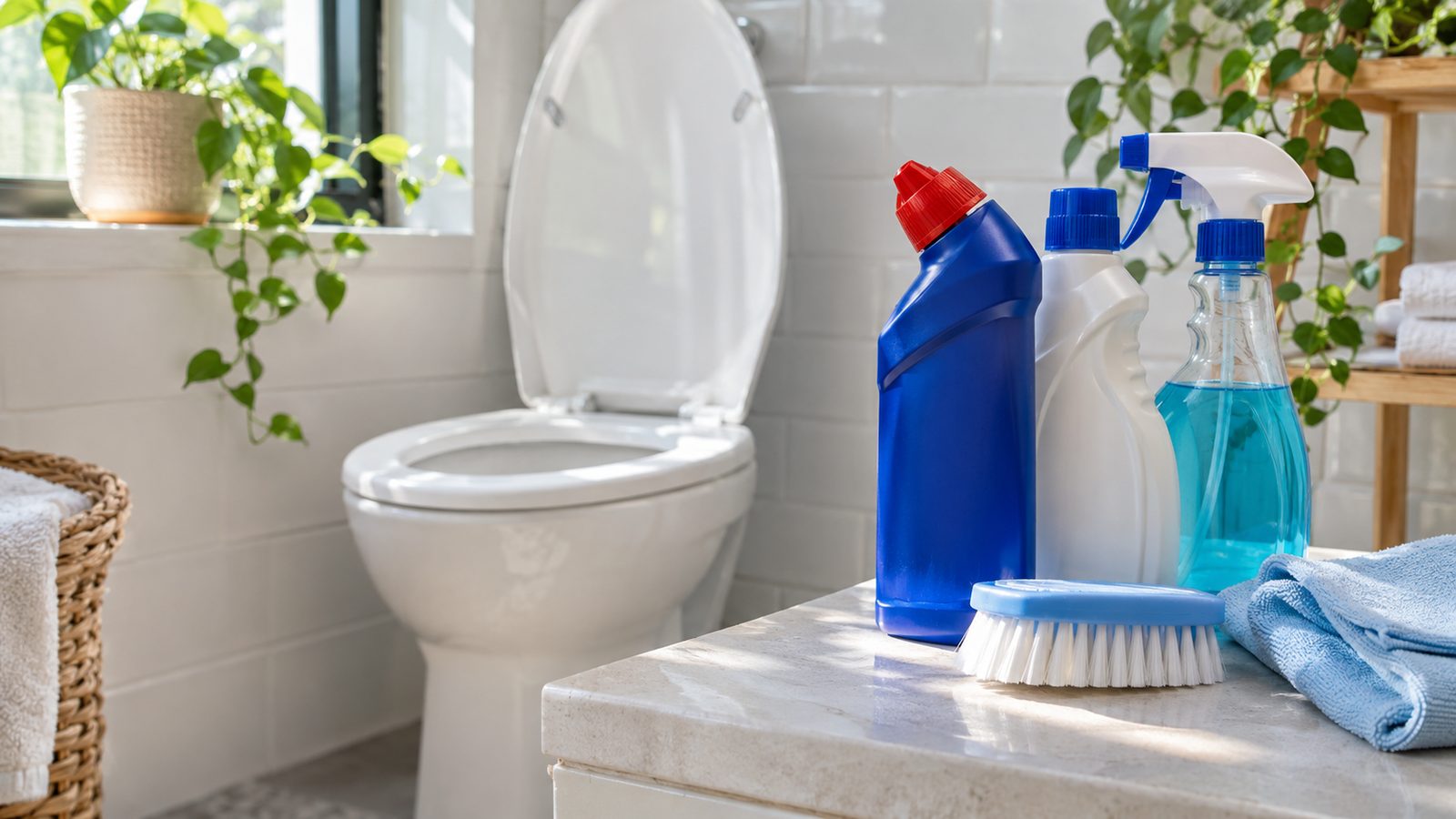
Choosing the best toilet bowl cleaner depends on what you need to remove. Weekly grime, hard-water rings, rust, and disinfecting needs call for different formulas. The right product can also reduce scrubbing and shorten your cleaning routine. Recent U.S. testing shows that gels, liquids, tablets, and cleaning systems can all work. Consumer Reports found meaningful performance differences among tested products. Liquid and gel formulas also make under-rim application easier. Quick answer: For most households, a clinging gel or liquid offers the best balance of cleaning power and easy application. Lysol works well for routine cleaning, while Clorox suits whitening needs. Choose an acidic cleaner for mineral buildup and a plant-based option when gentler ingredients matter more.
| Pick | Best for | Format | Main advantage | Main drawback |
|---|---|---|---|---|
| Clorox ToiletWand | Best overall system | Disposable cleaning wand | Cleaner and brush are combined | Replacement pads add cost |
| Lysol Power Clinging Gel | Weekly cleaning | Gel | Clings well and reaches under rims | Fragrance may feel strong |
| Clorox Clinging Bleach Gel | Whitening and disinfecting | Bleach gel | Strong stain and whitening action | Bleach requires extra care |
| Zep Acidic Toilet Bowl Cleaner | Rust and mineral stains | Acidic liquid | Targets hard-water deposits | Stronger chemistry needs caution |
| Better Life Toilet Bowl Cleaner | Plant-based cleaning | Gel | Plant-derived formula | May need more scrubbing |
| Blueland Toilet Bowl Tablets | Low-waste cleaning | Tablet | Plastic-light, convenient format | Higher cost per cleaning |
| Scrubbing Bubbles Fresh Gel | Maintenance | Gel stamp | Helps between deeper cleanings | Not a replacement for scrubbing |
How We Chose the Best Toilet Bowl Cleaner Options
This guide compares products appearing in recent testing and expert recommendations. We weighed cleaning format, stain type, convenience, ingredients, and household suitability. We did not conduct independent laboratory testing. Consumer Reports tested almost a dozen cleaners during its latest evaluation. Its researchers measured how effectively products removed simulated waste from porcelain surfaces. The testing included gels, liquids, strips, and dissolving tablets. NBC Select and Shop TODAY also gathered expert advice and product recommendations. Shop TODAY tested ten options against bathroom grime during its 2026 review. These sources helped identify products suited to different cleaning problems.
1. Clorox ToiletWand: Best Overall Cleaning System
The Clorox ToiletWand is our top choice for people who dislike storing a traditional toilet brush. Disposable cleaning heads attach to a reusable handle and release cleaning solution during scrubbing. Shop TODAY ranked the system as its best overall option after testing ten cleaners. Its biggest advantage is convenience rather than raw chemical strength. You scrub with the treated pad, release it without touching the dirty head, and store the handle. NBC Select also highlights the system as a practical disinfecting option. Pros
* Cleaner and scrubber come in one system. * Disposable heads reduce brush storage. * Easy to reach the bowl surface. * Useful for frequent bathroom cleaning.
Cons
* Requires replacement cleaning heads. * Creates more disposable waste. * Costs more over time than bottled gel.
2. Lysol Power Clinging Gel: Best for Routine Cleaning
Lysol Power Clinging Gel is a strong choice for ordinary weekly cleaning. Thick gel stays on the sloped porcelain longer than thin liquids. The angled bottle also helps place cleaner beneath the rim. If you share your home with a cat, keep the cleaner away from the litter area, as Milsblog’s guide to cat attract litter and litter-box care explains. Good Housekeeping praised Lysol Power for clinging to the bowl and making application easy. Its testing found that stains still required some scrubbing. NBC Select also recommends Lysol gel as an affordable option for regular cleaning. Pros
* Thick formula stays on bowl surfaces. * Angled neck reaches beneath the rim. * Widely available in U.S. stores. * Suitable for routine grime.
Cons
* Some stains still require scrubbing. * Scent can be noticeable. * Not designed specifically for major mineral buildup.
3. Clorox Clinging Bleach Gel: Best for Whitening
Clorox bleach gel makes sense when discoloration and whitening are your main concerns. Good Housekeeping found its bleach formula effective against toilet grime during testing. The gel also required relatively little scrubbing in that evaluation. Bleach products require careful handling, ventilation, and strict label compliance. Never combine them with ammonia, acids, vinegar, or another household cleaner. Dangerous gases can form when incompatible chemicals mix. Pros
* Strong whitening performance. * Clinging gel improves surface contact. * Useful for stained white porcelain. * Disinfecting versions are available.
Cons
* Requires careful ventilation. * Cannot be mixed with other cleaners. * Less suitable for households avoiding bleach.
4. Zep Acidic Toilet Bowl Cleaner: Best for Hard Water and Rust
Mineral deposits need a different approach from normal organic grime. Zep Acidic Toilet Bowl Cleaner is formulated for rust, hard-water marks, and stubborn staining. NBC Select specifically recommends it for those problems. An acidic cleaner can be useful where calcium buildup creates a persistent waterline ring. Follow the label closely and keep the bathroom ventilated during use. Never follow an acidic cleaner with bleach unless the label specifically permits that process. Pros
* Targets rust and mineral deposits. * Thick formula stays on vertical surfaces. * Angled bottle improves placement. * Useful in hard-water areas.
Cons
* Strong chemistry requires careful handling. * Not needed for ordinary weekly cleaning. * Should never be mixed with bleach.
5. Better Life Toilet Bowl Cleaner: Best Plant-Based Option
Better Life offers a gentler alternative for shoppers who prefer plant-derived cleaning ingredients. Consumer Reports included Better Life gel among its recently tested products. Shop TODAY also selected it for ordinary stain removal. Plant-based does not automatically mean stronger, safer in every situation, or disinfecting. Read the label for specific claims and required contact times. Expect tougher buildup to need more brushing or repeated treatment. Pros
* Plant-based positioning. * Familiar squeeze-bottle format. * Suitable for routine cleaning. * Useful for shoppers avoiding bleach.
Cons
* Heavy deposits may need extra work. * Disinfecting claims vary by product. * Performance depends on the stain type.
6. Blueland Toilet Bowl Tablets: Best Low-Waste Option
Blueland tablets suit shoppers who want concentrated cleaners with less disposable plastic. Drop a tablet into the bowl, allow it to dissolve, then scrub according to the directions. NBC Select named the system its best overall recommendation in its expert roundup. Consumer Reports also included Blueland tablets in its latest testing program. Its broader testing suggests solid cleaners can perform well alongside conventional liquids. The biggest tradeoff is price and the different application routine. Pros
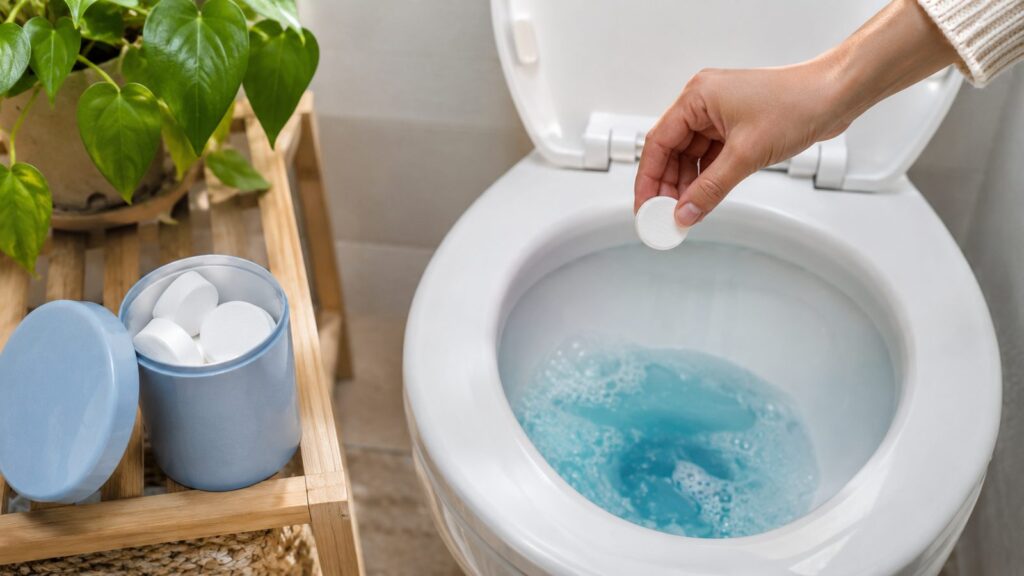
* Compact storage. * Reduced dependence on liquid bottles. * Simple tablet format. * Convenient for routine use.
Cons
* Can cost more per cleaning. * Still requires brushing. * Not the first choice for severe mineral stains.
7. Scrubbing Bubbles Fresh Gel: Best for Between-Clean Maintenance
Fresh Gel stamps work differently from products used during a full scrub. The gel stays inside the bowl and releases cleaner during flushing. Shop TODAY recommends the format for maintenance between deeper cleaning sessions. Think of it as a maintenance product rather than your only bathroom cleaner. A gel stamp will not replace manual scrubbing when buildup becomes visible. It can help stretch the time between more involved cleaning sessions. Pros
* Minimal daily effort. * Helps maintain freshness. * Easy to apply. * Useful between deep cleans.
Cons
* Does not replace manual scrubbing. * Requires repeated applications. * Less useful for existing heavy stains.
Which Type Should You Buy?
For ordinary weekly grime, start with a clinging gel such as Lysol. Choose bleach gel when whitening or disinfecting is the priority. Hard-water rings usually respond better to a cleaner intended for mineral deposits. Plant-based products make more sense when ingredient preferences outweigh maximum stain-removal power. Tablets appeal to shoppers seeking compact packaging and less liquid mess. A disposable wand works well when avoiding a traditional toilet brush matters most. Your water quality should also influence the choice. Consumer Reports notes that cleaning results can depend on water hardness and the amount of scrubbing used. No single formula is ideal for every toilet or every stain.
Toilet Bowl Cleaner Safety Rules That Matter
Never mix household cleaners inside the toilet. The CDC warns that bleach can react dangerously with ammonia and acidic products. Toilet cleaners themselves can contain acids, so switching products without rinsing can create unnecessary risk. Open a window or run your bathroom exhaust fan when using stronger chemicals. Follow the product’s exact directions, including any stated contact time. Store cleaning chemicals where children and pets cannot reach them. Pet owners should also keep bathroom chemicals separate from litter-box supplies. The same guide covers maintaining a cleaner feline bathroom area. Milsblog’s tortoiseshell cat care guide also discusses household safety for curious cats.
What About Septic Systems?
Homes using septic systems should pay closer attention to ingredients and dosing. Consumer Reports advises avoiding excessive use of harsh chemicals that could disturb septic bacteria. Its ratings identify products considered suitable for septic systems. That does not mean every “natural” product is automatically septic-safe. Check the manufacturer’s current label before buying or changing products. Use only the recommended amount instead of assuming more cleaner works better.
How Often Should You Clean the Toilet?
A weekly bowl cleaning works for many ordinary households. High-use bathrooms may need attention more often, especially when visible residue appears. Maintenance gels can help between deeper sessions but do not eliminate regular scrubbing. Hard water can make a bowl look dirty sooner because minerals accumulate around the waterline. Treat mineral deposits before they become thick enough to resist ordinary brushing. Using the correct chemistry early usually requires less aggressive scrubbing later.
Frequently Asked Questions
What is the best toilet bowl cleaner for tough stains?
The best toilet bowl cleaner for tough stains depends on the stain itself. Bleach gel can help with whitening and organic discoloration. Acidic formulas such as Zep are more appropriate for rust and mineral deposits.
Is gel better than toilet-cleaning tablets?
Gel gives you more control over where the cleaner sits. An angled nozzle also makes under-rim application easier. Tablets trade some application control for convenience and compact storage.
Can I use bleach after using another toilet cleaner?
Do not combine bleach with another cleaner unless the product directions explicitly say it is safe. Acids and ammonia can react with bleach and release dangerous gases. Rinse thoroughly and follow label instructions before changing products.
What cleaner works best on hard-water rings?
Look for a formula specifically intended for mineral deposits, calcium, lime, or rust. Zep is one current option recommended for rust and hard-water staining. Normal disinfecting gels may clean grime without fully dissolving mineral scale.
Are toilet-cleaning tablets as effective as liquids?
They can work well for routine cleaning, although formulas differ. Consumer Reports found that both traditional and dissolvable formats can clean effectively. Liquids still offer more precise under-rim placement.
Our Verdict
For most U.S. households, begin with a clinging gel or a convenient cleaning system. The Clorox ToiletWand is a strong convenience-focused choice, while Lysol gel suits regular bottle-and-brush cleaning. Choose Zep when hard-water minerals are the real problem. Match the formula to the mess rather than buying the strongest chemical available. Follow every label, ventilate the room, and never mix cleaning products. For more household and lifestyle reading, browse Milsblog’s Daily Bites section. —
