



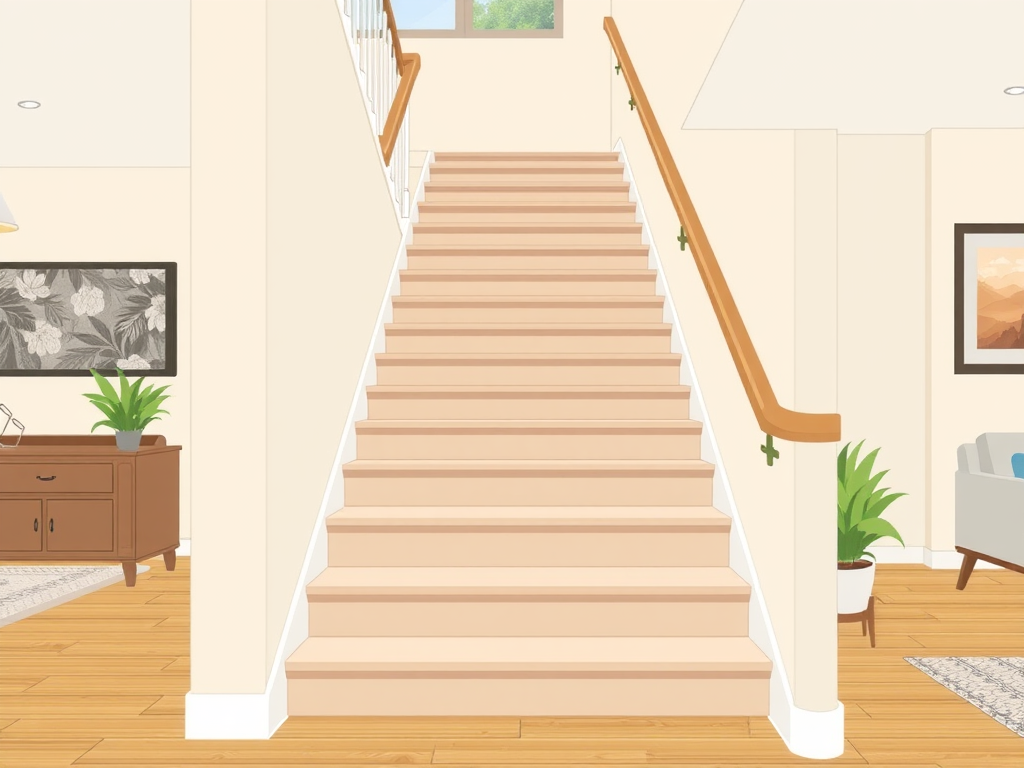
Whether you live in a multi-story building, visit a shopping mall, or simply climb the stairs at a park, you frequently encounter flights of stairs. But what exactly is a flight of stairs? In this article, we will explore the definition, components, types, and significance of a flight of stairs in architecture and daily life.
Defining the Flight of Stairs
A flight of stairs refers to a continuous series of steps or stairs between two landings or floors. Essentially, it is the uninterrupted passage you climb or descend without changing direction or stopping at a landing platform. Flights of stairs connect different levels in a building or structure and are integral to vertical movement.
Each flight is made up of several individual steps, which are the horizontal surfaces you step on. The flight ends at a landing, which is a flat platform that allows you to pause or turn before continuing to the next flight or floor.
Key Components of a Flight of Stairs
Understanding what makes up a flight of stairs helps appreciate its design and functionality. Here are the essential components:
- Treads: The flat part of each step where you place your foot.
- Risers: The vertical portion between each tread that provides height to the step.
- Stringers: Structural supports that hold the treads and risers in place, usually located on the sides or sometimes underneath.
- Landing: The platform at the end or in between flights providing resting space or directional change.
- Handrails and Balusters: Safety features alongside the flight, providing stability while ascending or descending.
Types of Flights of Stairs
Flights of stairs can vary widely depending on architectural design and building requirements. Here are some common types:
- Straight Flight: The simplest type, a straight series of steps without changes in direction.
- L-Shaped Flight: The flight turns 90 degrees at a landing, creating an “L” shape.
- U-Shaped Flight: Also known as switchback stairs, the flight makes a 180-degree turn at landings, forming a “U.”
- Spiral Flight: Steps wind around a central pole or column, often saving space.
- Circular Flight: Frequently used in grand staircases, these curve in an arc-like manner without a central support.
Importance and Functionality of a Flight of Stairs
Flights of stairs are fundamental for vertical movement within buildings, enabling efficient access between different levels. They serve both functional and aesthetic purposes. Architecturally, flights of stairs help define the flow and layout of interior spaces.
In emergency situations, stairs function as critical evacuation routes, especially when elevators are unavailable. Proper design of flights of stairs ensures safety, comfort, and accessibility, making them a regulated element in building codes worldwide.
Design Considerations for Flights of Stairs
Designing a flight of stairs involves careful consideration of several factors including:
- Step Dimensions: Tread depth and riser height must balance comfort and safety, often adhering to local codes.
- Width: The width of the flight affects traffic capacity and accessibility.
- Slope/Angle: The pitch of the stairs affects ease of use; excessively steep flights can be hazardous.
- Materials: Common materials include wood, concrete, metal, or stone, chosen based on structural needs and aesthetic appeal.
- Safety Elements: Handrails, anti-slip finishes, and adequate lighting contribute to user safety.
Conclusion
In summary, a flight of stairs is more than just a set of steps; it is a carefully designed architectural element that facilitates movement between floors. Comprising multiple steps between landings, flights of stairs come in various styles and configurations suited to different spaces and purposes. Whether in residential homes, commercial buildings, or outdoor environments, understanding what is a flight of stairs can help you appreciate its critical role in both function and design.
Next time you climb or descend a flight, take a moment to notice its design and how it fits into the building’s overall layout—you’ll see the blend of engineering and artistry that goes into these everyday structures.
Apart from that if you want to know about “These DIY Home Garage Tips” then please visit our “Home Improvement” Category.
